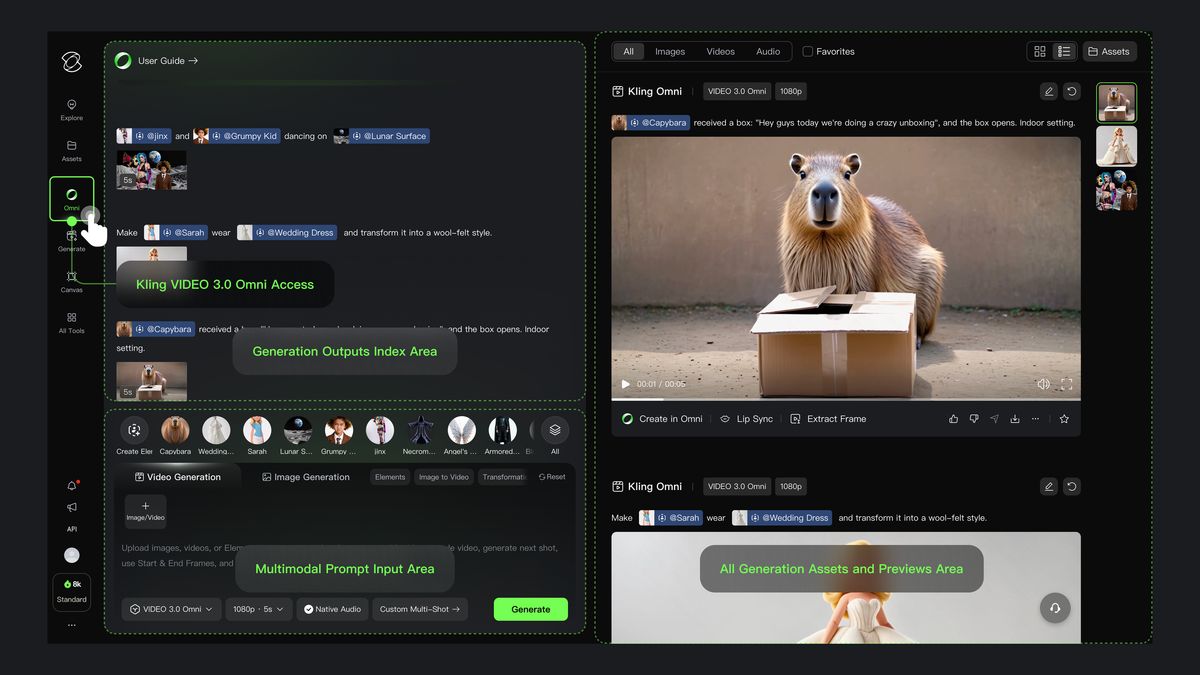
Kling VIDEO 3.0 Omni has taken a major leap in artificial intelligence video technology. The model combines text, image, and audio tasks into one native workflow. High-resolution visuals and synchronized sound allow creators to reach cinematic quality without complex tools. Narrative control is significantly enhanced through intelligent multi-shot logic and long take support.
A Quick Look at Kling VIDEO 3.0 Omni vs. Kling Video O1
Capabilities | Kling VIDEO O1 | Kling VIDEO 3.0 Omni |
No Native Audio, No Multi shot | Supports Native Audio and Multi shot | |
No Native Audio, No Multi shot | Supports Native Audio and Multi shot | |
Start and End Frames to Video | No Native Audio, No Multi shot | Supports Native Audio and Multi shot |
Multi image Reference | No Native Audio, No Multi shot | Supports Native Audio and Multi shot |
Element Reference | No Native Audio, No Multi shot | Supports Native Audio and Multi shot |
Video Element Reference | Not supported | Supports uploading or recording video elements |
Added Element Voice Control | Not supported | Supports adding voice to elements |
Multi Shot | Not supported | Supports multi shot generation |
Video Duration | Up to 10s | Up to 15s |
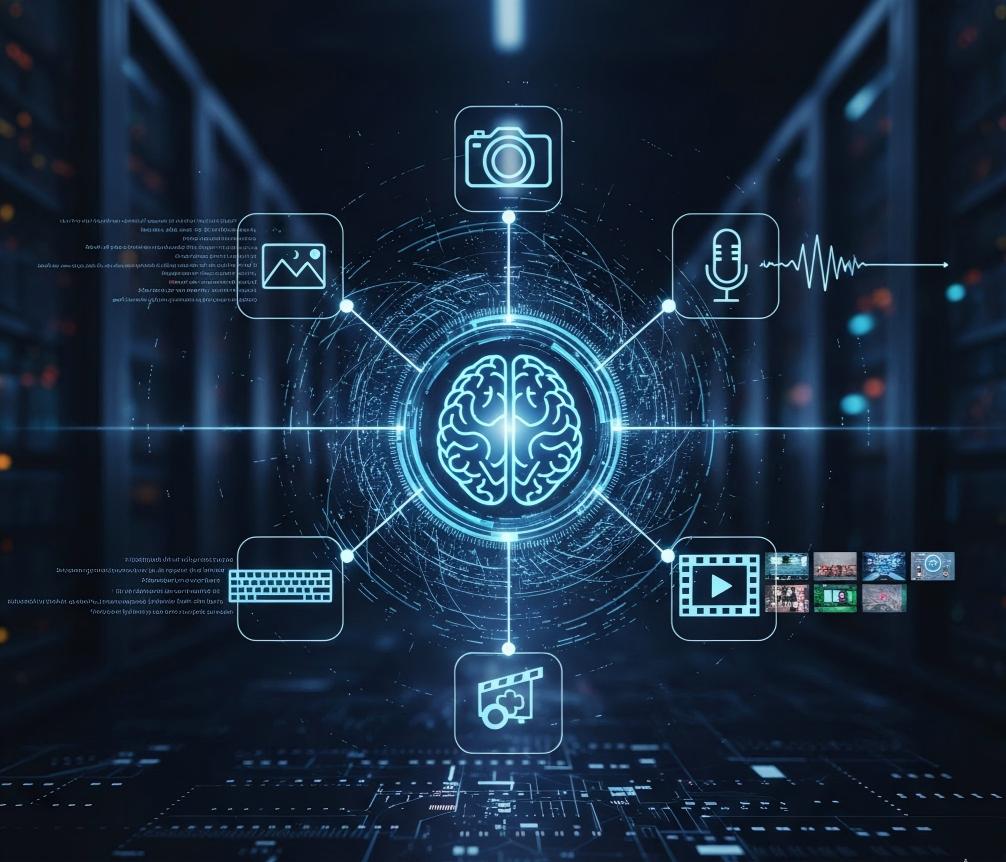
The Unified Multimodal Architecture of Kling VIDEO 3.0 Omni
The foundation of Kling VIDEO 3.0 Omni rests upon a unified training framework that merges previously separate generative tasks into a single pipeline. Earlier systems often required distinct models for text-to-video, image-to-video, and audio synthesis. Such fragmented approaches frequently resulted in a lack of cohesion between the visual and auditory elements of a scene. Through the implementation of the Multimodal Visual Language framework, the current model processes diverse inputs within a native architecture. That integration allows the system to follow complex narrative logic and maintain strong adherence to user prompts.
The shift toward a unified framework allows for more sophisticated reasoning within the generation process. When a user provides a description of a scene, the model simultaneously understands the spatial relationships between objects, the temporal flow of motion, and the corresponding acoustic environment. Such a holistic approach is what defines the Omni designation, signifying a comprehensive capability that spans multiple modes of creative output. The result is a production-ready clip that feels like a coherent piece of media rather than a collection of synchronized but separate files. The system handles the understanding, generation, and editing of video together in one streamlined workflow.
That integrated unified training framework supports full multimodal input and output spanning text, images, audio, and video. Earlier iterations, like Kling Video O1 or Kling Video 2.6, focused on specific modules for different tasks. In contrast, the 3.0 series models represent a transition from basic generation to sophisticated professional orchestration. That evolution allows the system to grasp artistic intent and turn complex ideas into reality. Since the launch of the platform, the service has grown to support over 60 million creators and 30,000 enterprise clients worldwide.
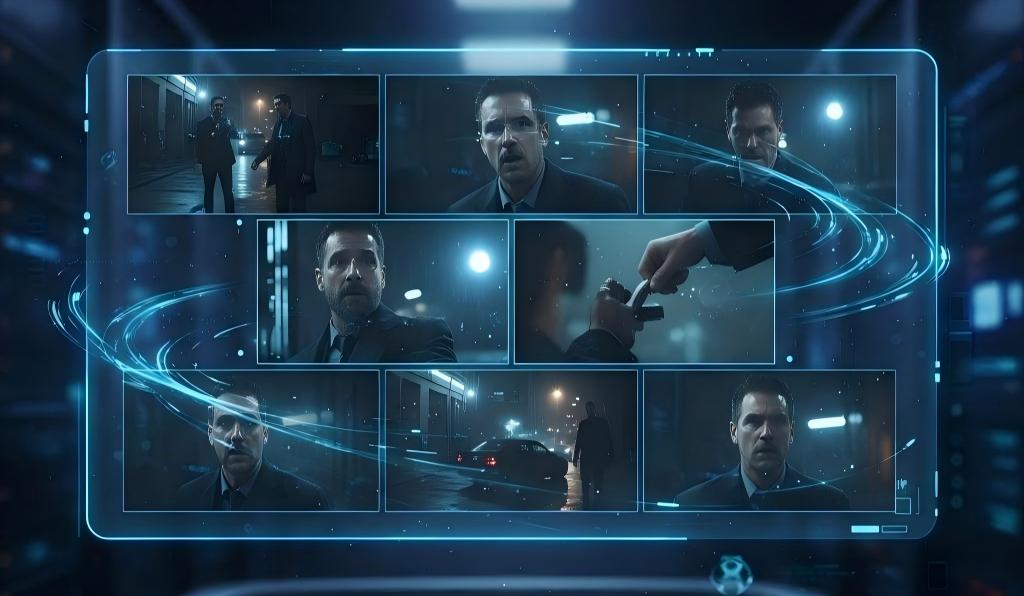
Intelligent Multi-Shot Storytelling and AI Direction
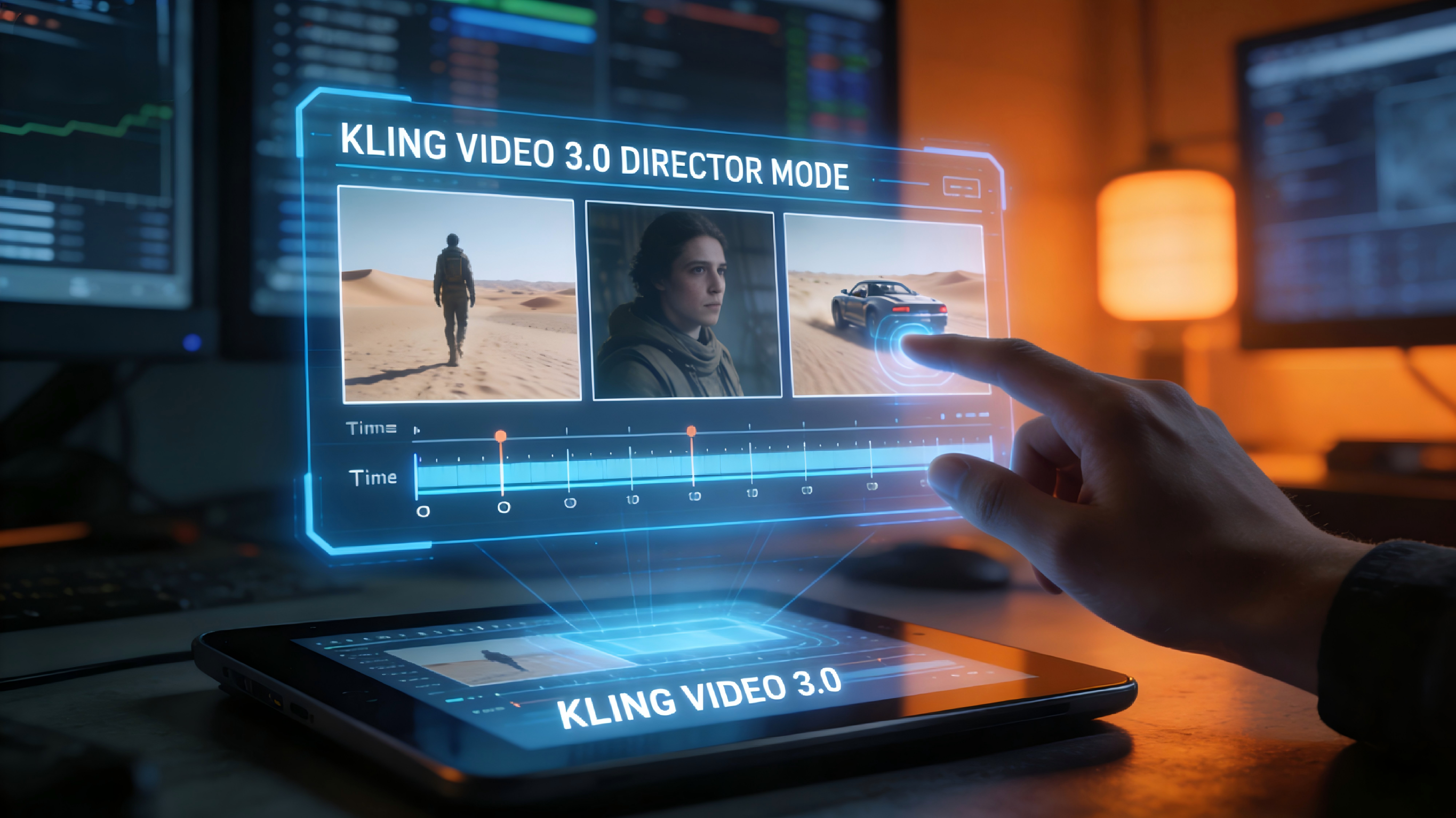
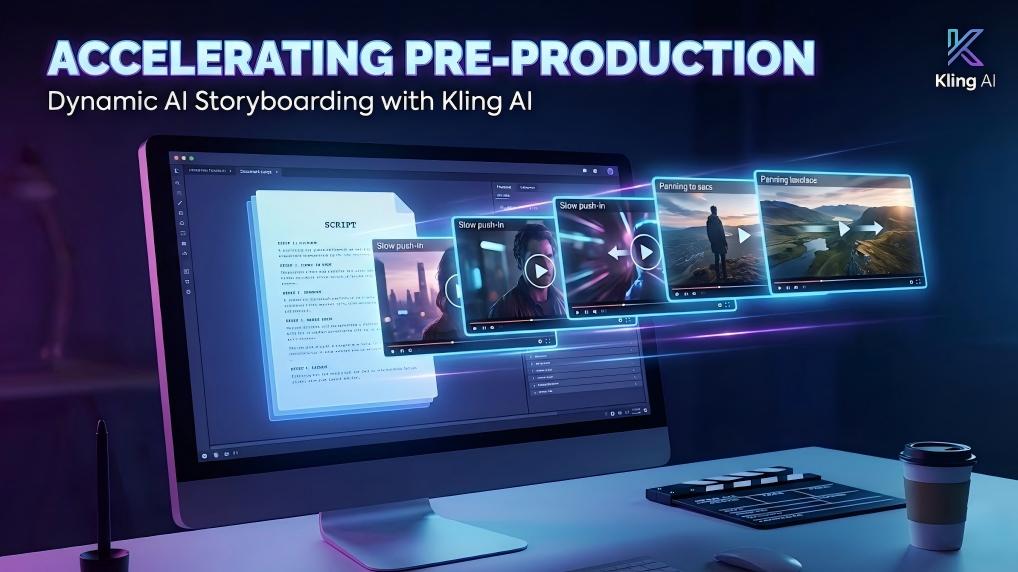
Kling VIDEO 3.0 Omni introduces an AI Director feature that brings professional filmmaking logic to the automated generation process. The model understands instructions for multiple scenes and shots within a single request. It can manage complex camera movements and transitions such as shot reverse shot dialogues or cross-cutting sequences. Through the interpretation of script-based prompts, the system automatically adjusts camera angles and perspectives to match the intended cinematic style.
That capability supports up to six camera cuts in a single generation, allowing for the creation of structured narratives without the need for manual editing. The model handles the transitions between these shots with a high degree of fluid consistency. For example, if a scene requires a transition from a wide shot of a character to a close-up of their reaction, the AI Director maintains the visual identity of the subject and the lighting of the environment across the cut. Such features transform the role of the user from a simple prompt engineer into a digital director who orchestrates the flow of a story.
Creators have the power to specify the duration, shot size, perspective, narrative content, and camera movements for each shot during the storyboarding process. That level of film grade control brings what used to be out of reach for consumer tools into the hands of digital storytellers. The system interprets complex multi-scene instructions, automatically adjusting shot angles and transitions to match cinematic styles. From dialogue reversals to cross-cutting and voice-over sequences, the model produces edited sequences rather than isolated clips.
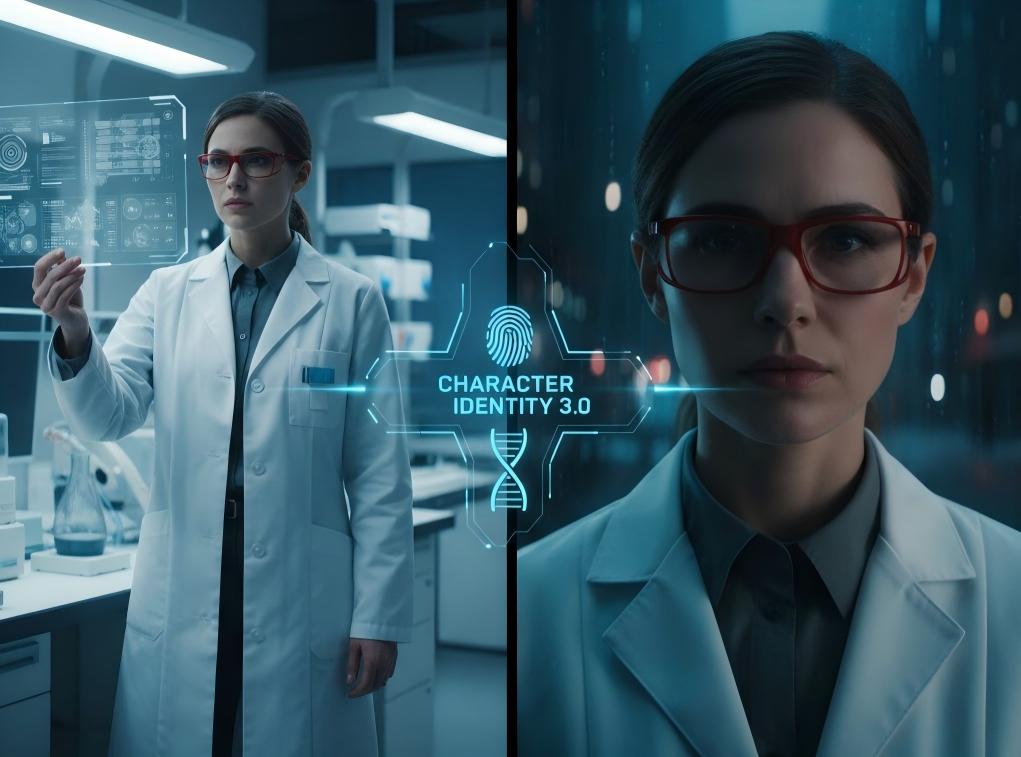
Breakthroughs in Character Consistency and Identity
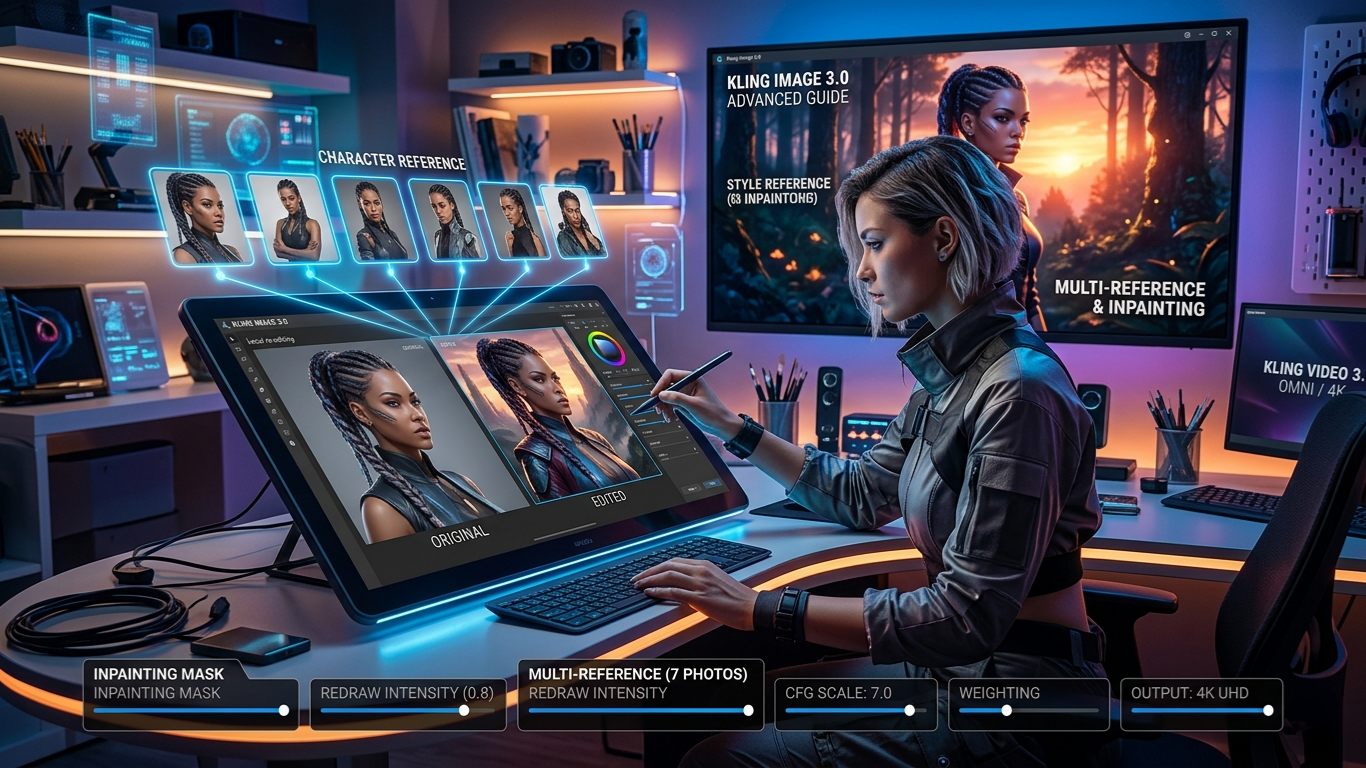
Maintaining the visual identity of a character across different shots has historically been a significant challenge for artificial intelligence. Kling VIDEO 3.0 Omni addresses that problem through the Character Identity 3.0 system. Creators can upload a reference video or multiple images to define a subject. The model extracts the specific visual traits, body movements, and even the original voice of the character from the provided source material.
The extracted identity stays authentic and expressive even as the character moves through different environments or performs various actions. The Video In, Character Out workflow allows for the replication of a specific person across an entire production. Through the use of advanced reference-based generation, the model achieves a high level of subject similarity that prevents the common issue of characters morphing or changing details between frames. That stability is crucial for long-form storytelling and professional advertising, where a consistent protagonist is required.
The strongest consistency level keeps subjects visually identical across multiple shots and camera angles. Creators upload a 3 to 8-second character video to lock character appearance and voice tone perfectly. That ensures the character does not change during the story. Subject similarity is stronger, scenes break less, and outputs are more reliable. Each generation feels more controllable, expressive, and production-ready for high-end media projects.
Native Audio Generation and Multilingual Support
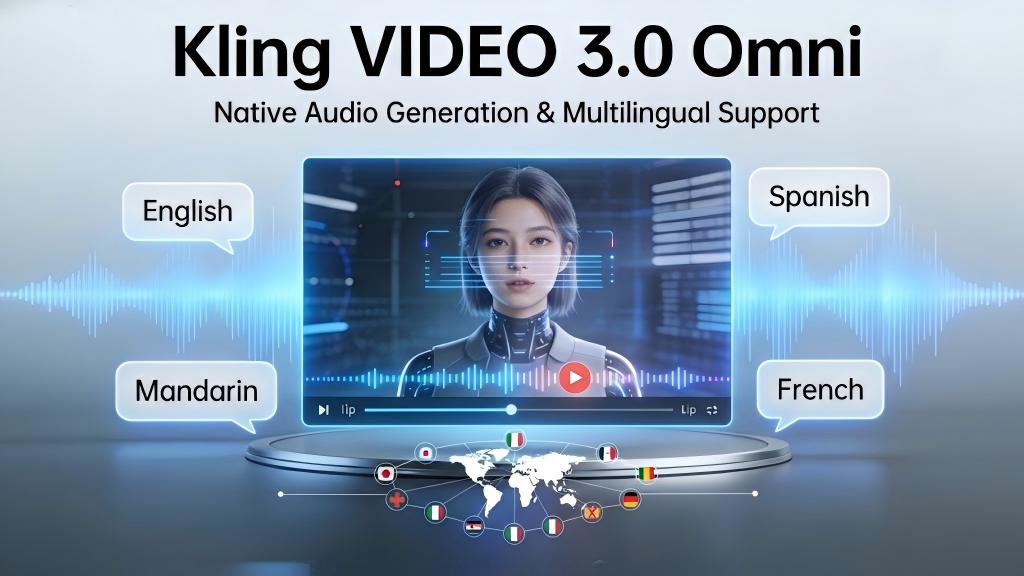
The integration of native audio synthesis is a defining feature of Kling VIDEO 3.0 Omni. Unlike earlier models that required post-production lip syncing, the current model generates video and audio together in a single pass. That unified process leads to perfectly synchronized dialogue, ambient sounds, and sound effects that match the on-screen action. The model also introduces speaker mapping, which assigns dialogue to the correct character in scenes involving multiple speakers.
The linguistic capabilities of Kling VIDEO 3.0 Omni are extensive, supporting several major languages and regional variations. Creators can produce content in English, Chinese, Japanese, Korean, and Spanish. Beyond standard languages, the model understands diverse accents, including American, British, and Indian variations of English, as well as various Chinese dialects. Such localized control allows for the creation of authentic content tailored to global audiences without the need for separate dubbing workflows.
The system produces crystal clear dialogue with precise user control over content, delivery, and speaking order. For multi-character conversation, a challenge in the video generation industry, the new models enable users to specify what actors speak, how, and when. Pacing and delivery stay natural. That removes the need for awkward silent videos or heavy post-production audio work, facilitating end-to-end production directly within the platform.
Extended Duration and Temporal Coherence
Kling VIDEO 3.0 Omni expands the temporal boundaries of artificial intelligence video with support for continuous generations of up to 15 seconds. That duration is a significant increase from the previous 10-second limit found in earlier versions. The extra time allows for the development of more complex plot twists, long takes, and intricate sequences that require a smooth narrative flow. Creators have the flexibility to select durations anywhere between 3 and 15 seconds to fit their specific needs.
The model maintains high temporal coherence throughout these longer clips, meaning the environment and subjects remain stable from the first frame to the last. Through the handling of complex actions and camera movements within a single generation, the system produces sequences that feel like professional film takes. The ability to create longer content reduces the reliance on stitching together multiple short clips, which often results in visual jumps or inconsistencies.
Extended video duration also means that the model can handle intricate sequences with smooth, film-like transitions. The creative space allows for complete stories, product demonstrations, or tutorial segments with precise timing. Action, camera motion, and character performance unfold naturally without cutting around artifacts. That allows for a standard of storytelling where cinematic narratives converge on a single platform.
Text Rendering and Brand Identity Preservation
A common struggle for generative video models is the accurate rendering of text and symbols. Kling VIDEO 3.0 Omni solves that through native level text rendering, keeping signage, captions, and branded elements sharp and readable. That accuracy is maintained even in dynamic shots where the camera or the subject is moving. For example, a character wearing a shirt with a specific logo will retain the clarity of that logo throughout the entire 15-second clip.
Such precision is particularly valuable for e-commerce and professional advertising. Brands can showcase their products with the confidence that the labels and logos will remain legible and authentic. The model can also generate structured text for subtitles or on-screen promotional information without any loss of clarity. That capability bridges the gap between raw AI generation and polished commercial assets that are ready for immediate use.
The model keeps signage and branded elements sharp from the first frame to the last. Signage, captions, and product labels are all rendered with precise lettering and well-structured layouts. Instead of distorted or drifting letters, text behaves like part of the scene. That is essential for e-commerce ads and branded content requiring readable text on screen.
Professional Use Cases and Industry Impact
The versatility of Kling VIDEO 3.0 Omni suits a wide range of professional applications. In the field of e-commerce, marketing teams use the model to transform product images into cinematic advertisements in minutes. The ability to maintain brand identity and character consistency allows for the creation of cohesive social media campaigns on platforms like TikTok and YouTube.
For the film and animation industries, the model serves as an intelligent creative partner that accelerates the visualization of storyboards and concepts. Independent filmmakers can utilize the AI Director and multi-shot features to produce high-quality scenes that would otherwise require significant budgets and post-production work. Through the reduction of production time and costs, the model expands the creative possibilities for small teams and solo creators alike.
Adoption spans the film and advertising industries, enhancing production workflows from animation and CGI to the creation of entirely new visual assets. The debut of the 3.0 series signals a fundamental shift in the role of artificial intelligence, transitioning from a mere generation tool to an intelligent creative partner capable of grasping artistic intent.
Frequently Asked Questions
Q1: What is the maximum duration for a video clip in Kling VIDEO 3.0 Omni?
The model supports the generation of clips with a length of up to 15 seconds. Users can specify any duration between 3 and 15 seconds to fit a particular story beat. That allows for more complete storytelling with richer actions and plots within a single generation.
Q2: How does the AI Director feature manage multiple camera angles in Kling VIDEO 3.0 Omni?
Kling VIDEO 3.0 Omni interprets script-based prompts to automate camera blocking and shot transitions. It generates up to six camera cuts in one request, including professional patterns like shot reverse shot dialogues. That feature eliminates the need for manual splicing or post-production processing for complex scenes.
Q3: Can Kling VIDEO 3.0 Omni generate dialogue in different languages and accents?
Yes, the model produces native audio in English, Chinese, Japanese, Korean, and Spanish. It also supports specific regional accents such as British, American, and Indian English alongside diverse Chinese dialects. That localized control allows for the creation of authentic content tailored to global audiences.
Q4: How does Character Identity 3.0 help maintain subject consistency in Kling VIDEO 3.0 Omni?
Creators can upload a reference video or images to define a subject. The model extracts physical traits and voice characteristics from that source to keep the character identical throughout the production. Even as the camera moves, the main appearance remains consistent without unexpected transformations midway.
Q5: Is on-screen text legible in high-resolution outputs from Kling VIDEO 3.0 Omni?
Kling VIDEO 3.0 Omni utilizes native level text rendering to keep signage and logos sharp. That precision remains consistent across different camera movements, which is ideal for commercial and e-commerce content. Captions and branded elements remain readable from the start to the finish of the clip.
Join Kling Today
Kling VIDEO 3.0 Omni offers a unified multimodal workflow for professional video production. The model supports 15-second clips with native audio synchronization and multilingual dialogue. Through the use of Character Identity 3.0 and the AI Director, creators maintain high consistency and narrative flow. The system represents a significant advancement in cinematic control and text rendering. These features empower millions of creators to create production-ready content with unprecedented ease.
Join us today and become one of our Pro, Premier, or Ultra members to unlock the powerful Kling 3.0, the future of AI video.